

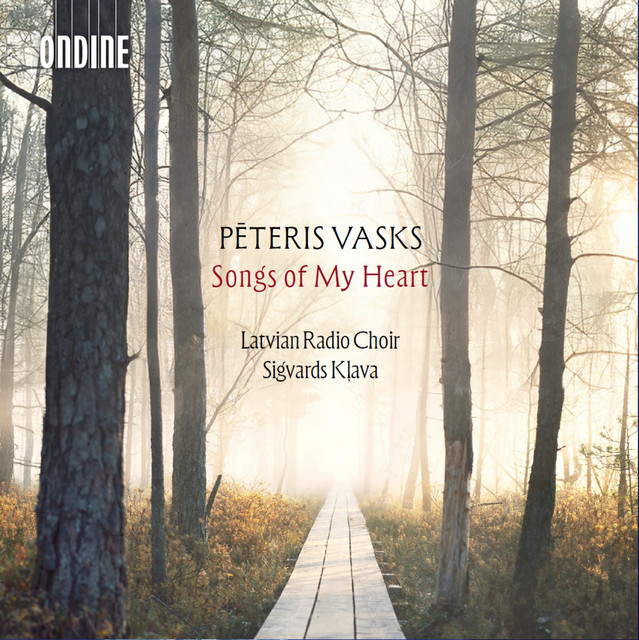
Pēteris Vasks | Songs of My Heart [Ondine]
Contemporary Classical / Choral / Sacred Music | 2026
Few contemporary composers have explored the expressive possibilities of sustained choral harmony with the consistency of Pēteris Vasks. Released on June 5, 2026, "Songs of My Heart" brings together more than six decades of his vocal writing, performed by the Latvian Radio Choir under Sigvards Kļava. Issued by Ondine to celebrate the composer's 80th birthday, the album contains 20 tracks spanning religious devotion, intimate poetry and reflections on Latvian identity. Several compositions receive their first recordings, including music written in 2025 and a remarkably early work from 1961. Throughout this collection, Vasks favors tonal clarity, extended melodic phrases and restrained harmonic movement. The choir responds with exceptional control, maintaining warmth and precision even when the music approaches complete stillness.
The opening "Actus caritatis", composed in 2021, establishes the recording's disciplined approach. Based on a Latin prayer concerned with Christian charity and love, the piece develops through sustained choral phrases and carefully measured harmonic changes. The singers maintain an unusually consistent balance between registers, allowing individual lines to remain audible within the blended ensemble. Vasks gives considerable attention to the relationship between melodic movement and harmonic resolution. Changes arrive gradually, and their emotional significance depends on the precise control of tension within the voices. Kļava understands this writing intimately. His direction avoids excessive dynamic emphasis, allowing the composition's natural progression to establish its intensity.
The five movements of "Love Songs", written in 2013 to poetry by Imants Ziedonis, provide some of the album's most affecting moments. "Love Songs: No. 1, Such Lightness" introduces a gentle melodic character supported by delicate harmonic progressions. The vocal writing remains intimate, with carefully controlled dynamics preserving the tenderness of the text. "Love Songs: No. 2, And Suddenly Such Silence" develops a particularly sensitive relationship between phrasing and sustained resonance. Pauses and extended notes give the singers considerable responsibility for maintaining musical continuity. "Love Songs: No. 4, Then Time Stopped" continues this concentration on lyrical expression, allowing subtle harmonic movement to shape the emotional character. Across the cycle, Vasks demonstrates how short compositions can sustain considerable expressive detail without elaborate structural development.
"The Fruit of Silence" offers another important perspective on the composer's spiritual concerns. Written in 2013 using words associated with Mother Teresa, its text connects silence with prayer, faith, love and peace. The musical language is deliberately accessible, built around consonant harmonies and broad melodic phrases. The Latvian Radio Choir's performance emphasizes the relationship between the text and the harmonic progression, maintaining excellent clarity without sacrificing vocal warmth. Particularly impressive is the ensemble's ability to sustain extremely soft passages while preserving the internal balance of the chords. These qualities give the work an unmistakable sincerity. The repeated emphasis on contemplation occasionally limits its dramatic development, yet the carefully controlled pacing remains persuasive.
The 1995 composition "Pater noster" develops the album's sacred character through an extended setting of the Lord's Prayer. Its nearly seven-minute duration allows Vasks to explore sustained melodic writing and gradual harmonic transitions with greater breadth. The relationship between upper and lower voices is especially important, with the ensemble's darker registers providing harmonic stability beneath the prominent soprano writing. Kļava maintains a measured tempo and careful dynamic control, preserving the continuity of the musical phrases. The performance gains intensity through the accumulation of harmonic tension and its eventual release. The choir's tuning and controlled diminuendos are particularly effective, allowing the quietest passages to retain their musical definition.
One of the collection's most interesting historical discoveries is "Prayer", composed in 1961 when Vasks was only fifteen. Its straightforward, strophic construction reveals an early interest in direct vocal expression and religious subject matter. The piece already contains elements that would become central to his mature compositions, particularly the importance of melodic clarity and harmonic accessibility. Heard alongside the surrounding works, it demonstrates the remarkable continuity of his musical concerns. "First Grass", composed in 2025 to poetry by Fricis Bārda, extends the collection into his most recent creative period. Its treatment of nature and contemplation reflects his continuing interest in the relationship between human experience and the natural world.
The substantial "Six Songs" cycle, also composed in 2025, is among the album's most significant additions. Setting poetry by Knuts Skujenieks, the six movements broaden the emotional perspective through texts concerned with personal experience, endurance and the search for peace. Their concise forms allow Vasks to examine different relationships between melody, harmony and verbal expression. The Latvian Radio Choir demonstrates considerable sensitivity to the changing character of the poetry, maintaining clear diction and carefully shaped phrases. The concluding "6 Songs: No. 6, I Wish You" provides a particularly touching conclusion to the sequence. The cycle also brings welcome variety to an album whose predominantly slow tempos and restrained dynamics can occasionally produce a certain sameness. Even so, the singers consistently reveal distinctions in harmonic character and vocal expression.
The final section turns toward Latvia itself. "Our Mountains", composed in 2017, and "Within My Nation", dating from 1990, introduce an explicitly national dimension to Vasks' writing. The latter, composed during a period of profound political change in Latvia, draws on poetry by Andrejs Eglītis and expresses a powerful attachment to cultural identity. The musical treatment remains rooted in the composer's familiar tonal language, yet the patriotic subject matter gives the performance additional emotional weight. "Fatherland", written in 2018 in connection with the centenary of Latvian independence, closes the recording with a lyrical affirmation of belonging. Its measured Andante cantabile character allows the choir to demonstrate once again its remarkable command of sustained vocal phrasing.
There are limitations to the album's deliberately consistent musical vocabulary. Across more than seventy minutes, the prevalence of slow tempos, consonant harmonies and soft dynamics can diminish the individuality of certain compositions. Listeners seeking pronounced rhythmic variety or substantial changes in texture may find the sequence demanding. Vasks frequently returns to familiar methods of expressing contemplation and devotion, and several shorter pieces leave relatively similar impressions. Nevertheless, the programming offers considerable historical breadth, while the inclusion of recent compositions and premiere recordings adds genuine value to the collection. The relationship between sacred music, personal emotion and Latvian cultural identity becomes increasingly apparent through the carefully selected repertoire.
The Latvian Radio Choir is the decisive strength of "Songs of My Heart". Under Sigvards Kļava, the ensemble delivers beautifully balanced performances characterized by accurate intonation, sensitive dynamics and exceptional control of extended melodic lines. The recording preserves the clarity of individual vocal registers while presenting a cohesive choral sound. Particularly admirable is the attention given to the endings of phrases, where subtle reductions in volume maintain tension without compromising musical stability. The performances demonstrate a thorough understanding of Vasks' expressive priorities and an impressive ability to communicate them through relatively simple musical materials.
"Songs of My Heart" is a substantial and rewarding examination of Pēteris Vasks' choral music. The inclusion of compositions from his adolescence alongside works written more than sixty years later reveals an unusually consistent artistic outlook, centered on compassion, spirituality and the importance of human connection. Although the limited range of tempos and recurring harmonic gestures occasionally weakens the album's momentum, the quality of the choral performances remains outstanding. The strongest pieces achieve considerable emotional intensity through disciplined musical expression, and the newly recorded repertoire provides important additions to the composer's recorded legacy. For listeners interested in contemporary sacred and secular choral music, this is a distinguished release whose finest moments reward close and repeated listening.
Rating: [4/5]