

Stornoway | Beyonder [Cooking Vinyl]
Indie Folk / Chamber Pop / Folk Rock | 2026
Stornoway have always had an unusual relationship with the natural world. For singer and ornithologist Brian Briggs, birds, oceans and endangered habitats are subjects of sustained personal and professional interest. On their fifth studio album, "Beyonder", released September 25, 2026 through Cooking Vinyl, that commitment informs eleven songs about exploration, ecological loss, human connection and the passage of time. The Oxford band expands its familiar acoustic arrangements with orchestral strings, brass, layered harmonies and contributions from an international cast of musicians. The result is ambitious and frequently affecting, although the arrangements occasionally become so elaborate that the songwriting struggles to retain its intimacy.
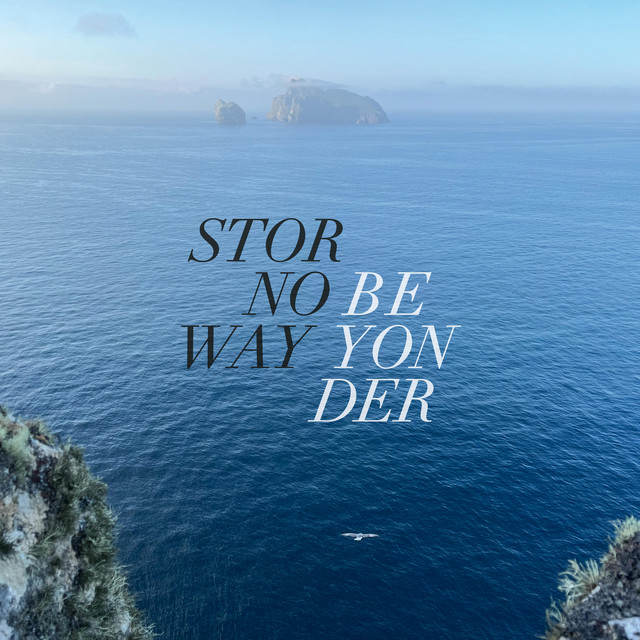
The album originated during Briggs's time volunteering as a National Trust ranger on St Kilda, a remote archipelago west of Scotland's Outer Hebrides. His experiences among abandoned settlements and seabird colonies informed the material, and a photograph he took there became the album cover. That background helps explain the record's persistent concern with humanity's relationship with nature. The opening "River Of Voices" introduces its communal ambitions through an extensive choral arrangement. The massed singers give the refrain considerable emotional force, with Briggs's delicate tenor occupying a relatively narrow space within the production. The arrangement reaches its greatest intensity early, leaving limited room for subsequent dynamic development. It establishes both the scale of the band's ambitions and the occasional difficulty of balancing individual expression with collective performance.
"Marco Polo" provides a particularly engaging demonstration of Stornoway's compositional personality. Running for more than five minutes, the song combines accordion, acoustic guitar, strings and a gently propulsive rhythm section. Briggs references historical explorers including Vasco da Gama, Thor Heyerdahl and Sacagawea before turning his attention toward the continuing discoveries involved in a personal relationship. The historical references give the verses a slightly eccentric narrative structure, while the chorus provides a strong melodic resolution. Jon Ouin's accordion contributes a distinctive rhythmic and harmonic character. The arrangement develops patiently, allowing the instrumentation to support the central melody without overwhelming it. Briggs's vocal delivery remains earnest throughout, giving the song an appealing emotional directness.
"Fire And Water" develops the album's orchestral ambitions through prominent strings, dramatic harmonic movement and rhythmic changes between sections. The arrangement contains considerable activity, with the rhythm section maintaining momentum beneath the expanding instrumentation. Briggs delivers the melody with his characteristic clarity, while the instrumental passages introduce greater tension through shifting accents and increasingly dense textures. The writing is ambitious, although the orchestral emphasis occasionally reduces the impact of the vocal performance. The song illustrates a recurring limitation of "Beyonder": Stornoway sometimes continue adding musical material after the central melodic idea has already reached a satisfying conclusion.
The following songs explore different levels of emotional intensity. "Skydiver" addresses romantic vulnerability through a narrative about trust and surrender. Its melodic writing is immediate, although the arrangement occasionally interrupts that momentum with theatrical changes in emphasis. "Hummingbird Feathers" provides a welcome return to the band's gentler melodic instincts. Its restrained emotional character demonstrates how effectively Stornoway can communicate through relatively simple musical ideas. Across these songs, Briggs remains a distinctive vocalist whose understated delivery is particularly effective when the arrangements leave sufficient space around his phrasing.
The album's most significant collaboration arrives with "The Honeyeater’s Song", featuring South African vocal ensemble Ladysmith Black Mambazo. Recorded following the groups' meeting in Durban, the track addresses the plight of an endangered honeyeater whose ability to reproduce is threatened by the disappearance of its learned mating song. Stornoway's melodic writing combines with Ladysmith Black Mambazo's richly layered vocal harmonies, giving the composition a distinctive collective character. The contrast between Briggs's delicate lead and the ensemble's resonant lower voices provides substantial musical interest. Rhythmic vocal exchanges and carefully organized harmonies carry the ecological message with considerable conviction. The collaboration is especially successful because the additional performers contribute directly to the arrangement's identity. Their presence changes the vocal structure and emotional intensity of the composition.
"The Book Of Time" turns toward personal memory and geological history. Its lyrics connect the physical record preserved in rock strata with childhood recollections of a loved one. The combination of scientific curiosity and family intimacy is particularly effective, giving the song emotional substance without requiring an elaborate narrative. Piano, accordion and brass contribute to an arrangement that gradually increases in intensity. Briggs's writing is at its most convincing when these personal observations remain central. The song's consideration of aging and remembrance provides one of the album's strongest lyrical moments.
"Mariana" continues the fascination with exploration, drawing inspiration from humanity's attempts to investigate the deepest parts of the ocean. The measured pacing and melodic restraint are well suited to its contemplative subject. Its gentler character provides a necessary change in dynamics within the album's second half. "Spirit Walker" introduces a darker harmonic direction, with minor-key passages, sustained instrumental textures and electric guitar effects. Inspired by transformation mythology and Briggs's experiences on St Kilda, it contains some of the record's most adventurous arrangement decisions. The extended instrumental development gives the musicians room to explore rhythmic and tonal possibilities. Its willingness to sustain tension makes it one of the album's most compelling compositions.
On "Wild Geese", guest vocalist Daisy Chute joins the band for a folk-oriented arrangement incorporating pedal steel guitar and violin. The additional vocal presence complements Briggs's delivery, while the instrumental writing maintains a relaxed rhythmic character. The song's melodic simplicity is attractive, although the accumulating strings occasionally make the arrangement unnecessarily dense. The closing "Leave Your Light On" returns to the album's central concerns with reassurance, vulnerability and human connection. Prominent fiddle passages and expansive vocal production give the conclusion considerable emotional intensity. Some of its extended instrumental gestures feel excessive, particularly after an album that has repeatedly employed similar methods of building toward climactic passages.
Oli Jacobs's mixing contributes to the album's polished production, maintaining clarity across arrangements containing acoustic instruments, orchestral elements and substantial vocal ensembles. Nevertheless, the frequent emphasis on large arrangements sometimes restricts the contrast between songs. The quieter compositions demonstrate the expressive possibilities of Briggs's melodies, while the most elaborate passages occasionally rely too heavily on instrumental accumulation. Greater restraint in several sections would have strengthened the album's overall pacing.
Within Stornoway's discography, "Beyonder" continues the environmental concerns of "Bonxie" and the renewed creative activity that produced "Dig The Mountain!" in 2023. Its international collaboration, ambitious instrumentation and recurring interest in scientific discovery represent a substantial expansion of the band's musical approach. The most successful moments emerge when the songwriting provides a clear emotional focus for those ambitions. "Marco Polo" combines imaginative lyricism with strong melodic development, "The Honeyeater’s Song" demonstrates the possibilities of collaborative vocal arrangement and "Spirit Walker" offers a genuinely adventurous approach to harmonic tension.
At approximately 44 minutes, "Beyonder" contains enough musical variety to sustain interest, even when its considerable enthusiasm for orchestration becomes excessive. The album's strongest qualities are its melodic craftsmanship, emotional sincerity and distinctive approach to subjects that have occupied Briggs throughout his career. Its weaknesses are concentrated in arrangements that occasionally prioritize scale over musical development. Stornoway have produced a thoughtful and often moving collection that rewards attention to its instrumental details and lyrical concerns, with several songs demonstrating how effectively their folk foundations can accommodate broader musical ideas.
Rating: [3.5/5]